Not medical advice. This is my personal experience with ulcerative colitis. I'm not a doctor. Always consult your gastroenterologist about your specific situation.
I've had ulcerative colitis for almost five years now. I thought I knew how to manage it. I was wrong.
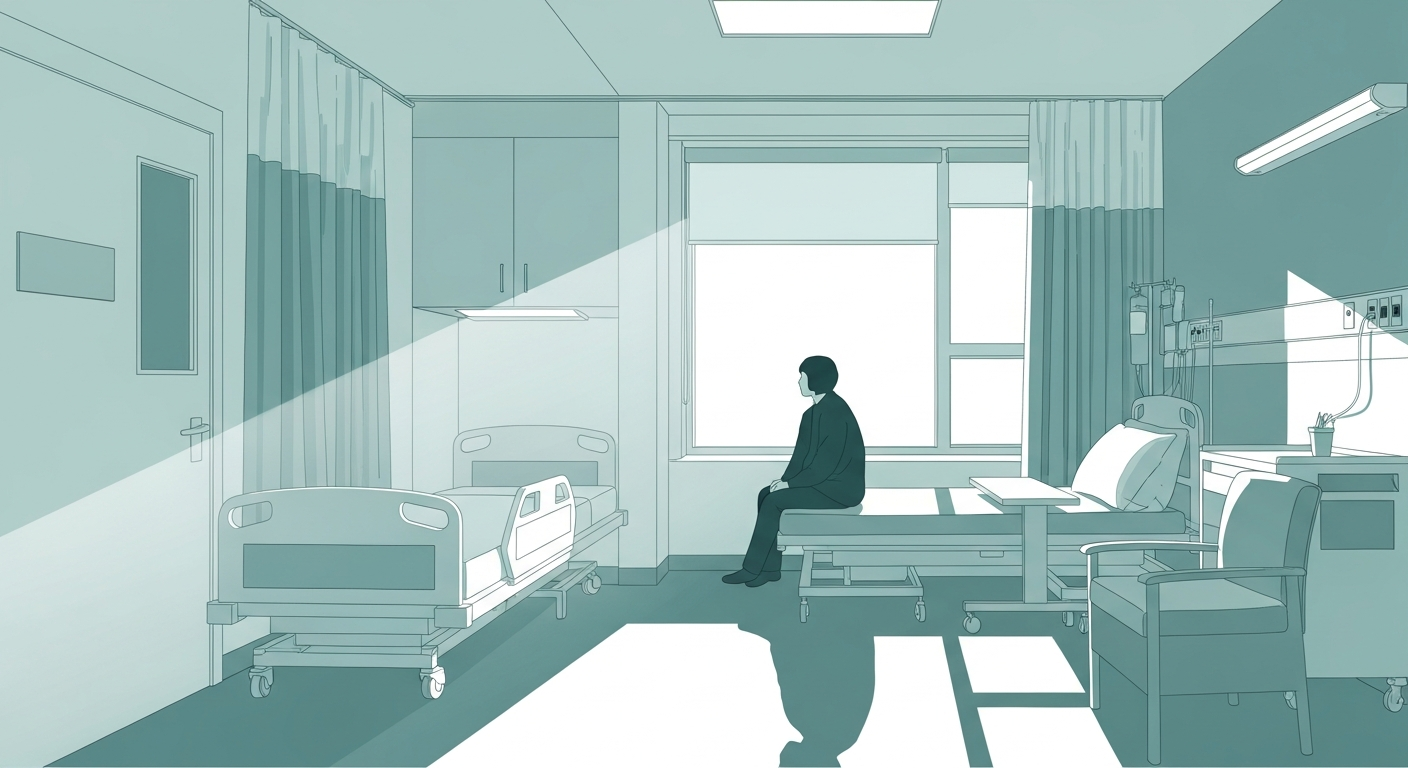
Last year, I ended up in the hospital for two days, hooked up to an IV, getting pumped full of the medication I'd been trying so hard to avoid. And the worst part? It didn't have to happen.
That hospital stay is why Flare Log exists.
The Month I Tried to Tough It Out
It started slowly, the way flares always do. A little more urgency in the morning. Some blood that I told myself was "not that much." Cramping that I blamed on something I ate.
I was on Mesalamine, my maintenance medication, and it had been working fine for a while. So I convinced myself this was just a minor setback. A blip. Nothing to bother my GI about.
At the same time, life was happening. We were dealing with a difficult family situation—the kind of stress that sits in your chest and doesn't let go. I didn't have the bandwidth to deal with a flare on top of everything else. So I decided I wouldn't.
Week one: I noticed more blood. Told myself it would pass.
Week two: The cramping got worse. I started planning my day around bathroom access. Still didn't call my doctor.
Week three: I was exhausted. Running to the bathroom ten, twelve times a day. The blood was impossible to ignore now. But I kept thinking: maybe it'll turn around. Maybe tomorrow will be better.
Week four: I couldn't get off the couch. The pain was constant. I finally called my GI's office.
The Conversation I Dreaded
When I finally talked to my GI, I already knew what she was going to say. Prednisone.
If you have IBD, you probably understand my reaction. Prednisone is effective—incredibly effective—but it comes with a list of side effects that reads like a horror novel. Moon face. Weight gain. Mood swings. Insomnia. Bone density loss. I'd been on it before, and I'd sworn I'd do everything possible to avoid it again.
"Let's try increasing the Mesalamine first," I said. "Give it a few more days."
My GI agreed to try, but I could hear the hesitation in her voice. She knew. I knew too, honestly. I just didn't want to accept it.
Three days later, I was in the emergency room.
Two Days in the Hospital
The pain had gotten unbearable. I couldn't keep anything down. I was dehydrated, weak, and scared. My wife drove me to the ER, and within a few hours, I was admitted.
They put me on IV prednisone. The medication I'd been so determined to avoid, now being pumped directly into my bloodstream because I'd let things get so bad that pills wouldn't work fast enough.
I lay in that hospital bed for two days, staring at the ceiling, thinking about all the points where I could have made a different choice.
If I had tracked my symptoms from day one and seen them getting worse on a chart, would I have called my GI sooner? If I had a clear record to show her—"Look, this is what's been happening for four weeks"—would we have acted faster? I think so. I really do.
What I Learned
Lying in that hospital bed, I made a list of everything I'd done wrong:
- I didn't track anything. I had a vague sense that things were "getting worse," but no actual data. No way to see the pattern.
- I waited too long to contact my GI. By the time I called, I was already in crisis.
- I was afraid of the medication. My fear of prednisone made me avoid getting help until I needed even more of it.
- I didn't advocate for myself. When I finally talked to my doctor, I didn't have the information I needed to have a real conversation about my care.
Every single one of these problems could have been solved by better tracking and earlier communication.
The App I Wish I'd Had
When I got home from the hospital, I started looking for a symptom tracker. Something simple that would help me log how I was feeling each day so I could catch flares earlier.
What I found was disappointing. Most apps wanted me to create accounts and sync my health data to their servers. For something as personal as tracking blood in my stool? No thanks. Other apps were so complicated that logging a single entry took forever. I knew I'd never stick with them.
I'm a software developer by profession. So I did what developers do: I built what I needed.
Why Flare Log Works the Way It Does
Every decision I made building Flare Log came from that hospital stay:
It's fast. Logging an entry takes literally ten seconds. Pain level, blood, urgency, quick note if you want. Done. Because I know that if it takes longer than that, you won't do it when you're exhausted and running to the bathroom for the eighth time today.
It's private. Your data never leaves your device. No accounts, no cloud sync, no servers storing your symptoms. This is deeply personal health information. It should stay yours.
It shows you patterns. When you look back at a week or a month of entries, you can see trends that are invisible day-to-day. That slow escalation that I missed? It would have been obvious on a chart.
It creates reports for your doctor. You can export a PDF summary to bring to your GI appointment. No more trying to remember "when did the blood start?" or "was it worse last week or the week before?" It's all there in black and white.
The point isn't the app. The point is having data that helps you communicate with your care team earlier. Whether you use Flare Log or a notebook or a spreadsheet—track something. Don't do what I did.
What I'd Tell Myself Before That Flare
If I could go back to the beginning of that terrible month, here's what I'd say:
Don't wait. The moment you notice symptoms changing, start logging. And if they're getting worse for more than a few days, call your GI or IBD nurse. That's what they're there for. You're not bothering them.
Blood is always worth mentioning. I know it feels awkward. I know you might think "it's not that bad." Tell them anyway. Let your doctor decide if it's significant.
Don't be afraid of the medications. Yes, prednisone sucks. You know what sucks more? Being in the hospital on IV prednisone because you waited too long for oral prednisone to work. Sometimes the medication you're avoiding is the one that keeps you out of the ER.
Take control of your appointments. Write down your symptoms. Bring data. Prepare questions. You're the expert on your own body. Your GI is the expert on IBD. Together, with good information, you can make better decisions.
Why I'm Sharing This
I debated whether to write this post. It's not easy admitting that I ended up in the hospital because I was stubborn and scared. But I know I'm not the only one who's done this.
If you're reading this and you're in the middle of ignoring symptoms that are getting worse—stop. Call your doctor. Start tracking what's happening. Don't wait until you're in the ER wishing you'd acted sooner.
That's why I built Flare Log. Not because I think everyone needs an app, but because I needed a tool that would help me be honest with myself about how I was really doing. Something that would make it easy to track the bad days so I could see when "a few bad days" turned into "a dangerous pattern."
I can't get back the month I spent suffering unnecessarily, or the two days in the hospital, or the weeks of prednisone side effects that followed. But maybe I can help someone else avoid the same thing.
Track your symptoms. Communicate with your care team. Take control of your IBD before it takes control of you.
That's why Flare Log exists.
Don't Wait Like I Did
Flare Log is free to download. No accounts, no cloud sync, no data collection. Just a simple way to track your symptoms and catch flares early. It takes 10 seconds to log an entry.
Download Flare Log