Not medical advice. This is my personal experience with IBD. I'm not a doctor or dietitian. Always consult your gastroenterologist about your specific dietary needs.
When I got diagnosed with IBD, my first thought was: "What am I supposed to eat now?"
My second thought was: "Wait, all the IBD diet advice is about avoiding fiber and eating bland Western food. What about dal? Roti? Sabzi? Am I supposed to just... stop eating Indian food?"
If you're South Asian and vegetarian (or mostly vegetarian) with IBD, you've probably felt this too. All the diet guides talk about white bread and chicken breast. Nobody talks about khichdi or how to handle a family dinner where everything has been tadka'd within an inch of its life.
So let me share what I've learned navigating IBD while eating a primarily Indian vegetarian diet. This isn't medical advice—it's hard-won experience from someone who refused to give up desi food entirely.
The Good News First
Indian vegetarian cooking actually has some things going for it when it comes to IBD:
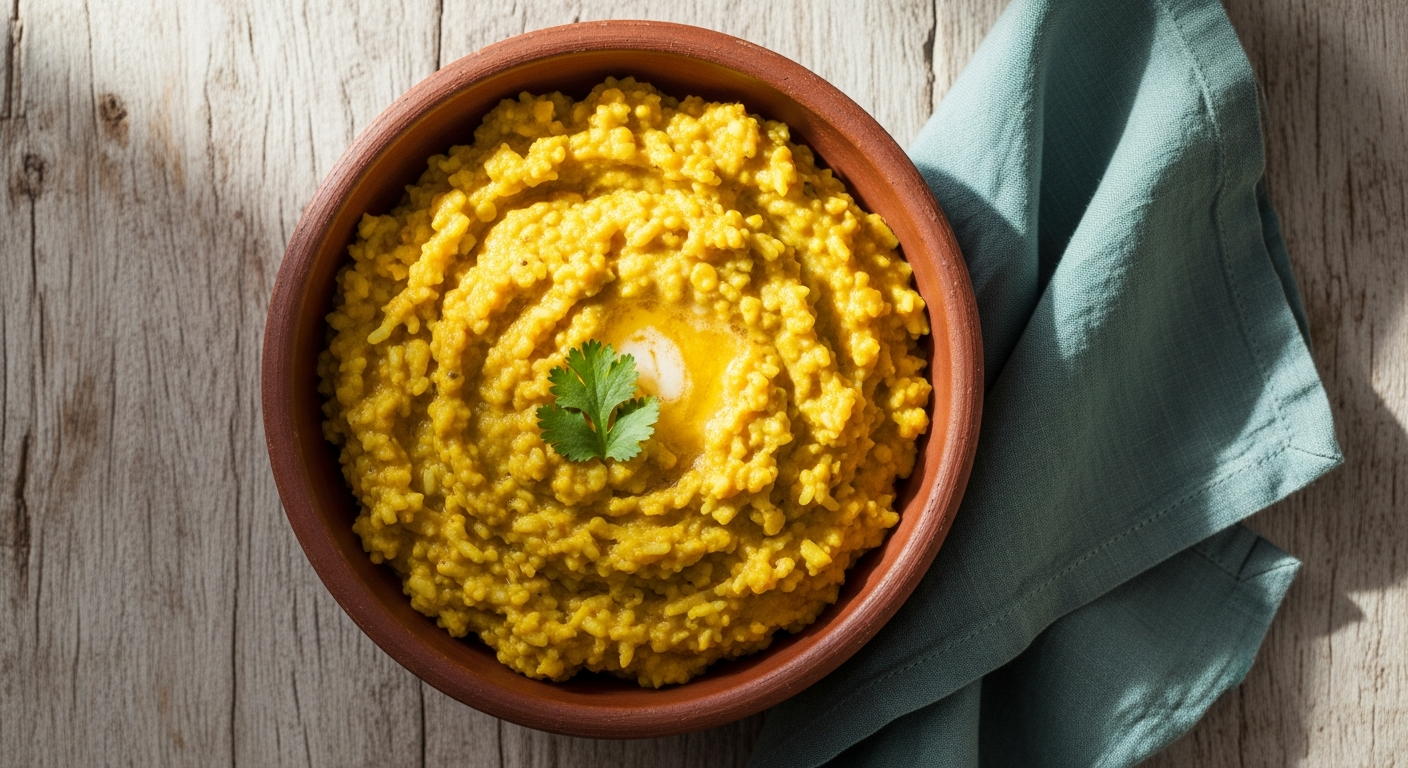
- Khichdi exists. Seriously, this is basically the perfect IBD food. Soft, easy to digest, gentle on the gut. It's what our grandmothers gave us when we were sick for a reason.
- We cook our vegetables. Unlike Western salads, most Indian sabzi is well-cooked, which is easier on inflamed intestines.
- Turmeric is already in everything. There's actual research on turmeric and gut inflammation. We've been doing this for centuries.
- Rice is a staple. White rice is one of the safest carbs during a flare, and it's already a huge part of Indian cuisine.
- We know how to make food taste good without relying on raw vegetables. When you're limited in what you can eat, flavorful cooking matters.
The Challenging Parts
But let's be real—Indian food also has some challenges:
- Spice levels. A lot of us grew up with food that would make most gastroenterologists wince. Adjusting is hard.
- Fiber everywhere. Beans, lentils, whole wheat—staples of Indian vegetarian cooking—can be rough during flares.
- Family expectations. "Beta, why aren't you eating? Have some more. This is special, I made it for you." Sound familiar?
- Oil and ghee. Indian food can be heavy on fats, which some IBD guts don't love.
- Limited protein options. If paneer and dal both bother you, what's left?
What's Actually Worked for Me
During Flares: Keep It Simple
When things are bad, I stick to what I call "sick person Indian food":
- Plain khichdi—moong dal and rice, minimal spices, maybe a little ghee and salt. This is my go-to.
- Curd rice—if I can tolerate dairy. Plain yogurt mixed into rice with a tiny bit of salt. Oddly soothing.
- Well-cooked moong dal—thin, almost like soup. Easy to digest.
- Plain rice—with maybe just a little ghee and salt.
- Ripe bananas—technically not Indian food, but kela is kela.
I avoid heavier dals (chana, rajma, urad) completely when flaring. Those can wait.
During Remission: Strategic Eating
When I'm feeling okay, I reintroduce things carefully:
Usually Fine for Me
- Moong dal (well-cooked)
- White rice, rice dishes
- Soft rotis (not thick parathas)
- Lauki, tori, peeled potatoes
- Dahi (if not lactose sensitive)
- Mild paneer dishes
- Idli, dosa (fermented = easier)
- Khichdi variations
Proceed with Caution
- Toor dal, masoor dal
- Cabbage, cauliflower (gobi)
- Capsicum, tomatoes
- Whole wheat (atta)
- Spicier curries
- Fried snacks
- Pickles, chutneys
Usually Regret
- Chana, chole, rajma
- Raw onion, raw salads
- Very spicy food
- Bhindi (okra—too fibrous)
- Deep fried anything
- Heavy cream-based dishes
Spices That Seem Okay
- Turmeric (haldi)—may actually help
- Cumin (jeera)
- Coriander (dhania)
- Ginger (adrak)—in moderation
- Hing (asafoetida)—helps digestion
- Fennel (saunf)
Important: Your list will be different from mine. IBD is incredibly individual. What kills me might be fine for you, and vice versa.
The Notes Feature Is Your Friend
Here's something that genuinely helped me figure out my personal trigger foods: logging what I ate.
In Flare Log, there's a notes field where you can jot down anything relevant—takes literally 5 seconds. I started adding quick notes like "mom's rajma" or "extra spicy dal" or "restaurant paneer." Over a few weeks, patterns emerged that I never would have noticed otherwise.
I discovered that homemade moong dal is fine for me, but restaurant dal (which is usually toor or a mix) causes problems. I only figured this out by looking back at my notes alongside my symptom patterns. That kind of insight is worth the 5 seconds it takes to type.
You don't have to write essays. Just a few words: what you ate, where you ate, anything different about today. When you look back at a week or month of data, those notes become incredibly valuable.
Dealing with Family & Social Situations
Let's talk about the elephant in the room: Indian family dynamics and food.
The "Why Aren't You Eating?" Problem
Indian hospitality revolves around food. Refusing food can feel like an insult. Here's what's helped me:
- Tell close family directly. "I have a stomach condition. The doctor said I need to avoid certain foods." Most desi parents understand "doctor's orders."
- Eat before you go. If you've already had something safe at home, you can eat small portions at gatherings without going hungry.
- Find your safe dish. At most Indian gatherings, there's usually plain rice, plain dal, or roti. Load up on those.
- Offer to bring something. I've started bringing khichdi or a simple dish I know I can eat. People think I'm being helpful; really I'm ensuring survival.
Restaurant Strategies
Indian restaurants are tricky because you can't control the spice level or oil:
- Ask for things "less spicy" or "no chili"—they're usually accommodating
- Plain dal and rice is almost always available
- Tandoori items tend to be less oily than curries
- Avoid the buffet—you don't know how long food has been sitting out
- When in doubt, idli-sambar from a South Indian place is usually safe
Recipes I Actually Eat During Flares
Basic Khichdi (IBD-Friendly Version)
This is stripped down from traditional khichdi—no tadka, no heavy spices:
- 1/2 cup moong dal (yellow, split)
- 1/2 cup white rice
- 4-5 cups water
- 1/4 tsp turmeric
- Salt to taste
- 1 tsp ghee (optional)
Wash dal and rice together. Add water, turmeric, salt. Pressure cook for 3-4 whistles until very soft. Mash slightly. Add ghee if tolerated. That's it. Boring? Maybe. But your gut will thank you.
Simple Moong Dal Soup
- 1/2 cup moong dal
- 3 cups water
- Pinch of turmeric
- Small piece of ginger (optional)
- Salt
Cook until dal is completely soft and breaking apart. Remove ginger. Blend if you want it smoother. This is basically liquid comfort.
Pro tip: Make a big batch of khichdi or dal when you're feeling okay, and freeze portions. When a flare hits, you'll have safe food ready without having to cook.
What About Protein?
This is the hard part for vegetarians with IBD. Our main protein sources—lentils and beans—can be rough on inflamed guts. Some options:
- Moong dal is the gentlest of the dals. Start there.
- Paneer works for some people (if you tolerate dairy). Soft paneer in mild gravy, not fried.
- Dahi/yogurt has protein and probiotics. Plain, not flavored.
- Eggs if you eat them—I know many Indian vegetarians don't, but they're easy to digest.
- Tofu is worth trying. It's basically paneer's soy cousin.
During bad flares, honestly, I don't stress too much about protein. I focus on not making things worse and eat what I can tolerate. You can worry about balanced nutrition when you're feeling better.
The Turmeric Question
You've probably heard that turmeric is good for inflammation. There's actually some science behind this—curcumin (the active compound in turmeric) has shown anti-inflammatory properties in studies.
But here's my take: the amount of turmeric in regular cooking probably isn't enough to be therapeutic. And taking huge doses of turmeric supplements can irritate your stomach.
I don't take turmeric supplements, but I do use it normally in cooking. It's part of our cuisine anyway. I figure it can't hurt, and it might help a little. But I'm not counting on haldi doodh to cure me.
Track What Actually Works for You
Everyone's IBD is different. Use Flare Log to track your symptoms and add notes about what you ate. Over time, you'll figure out your personal safe foods and triggers. It takes 10 seconds to log—your gut is worth it.
Try It FreeFinal Thoughts
Having IBD as an Indian vegetarian means you're playing the diet game on hard mode. There's no getting around that. A lot of our staple foods are high-fiber, high-spice, or both.
But you don't have to give up Indian food entirely. You adapt. You find your safe dishes. You learn which restaurants won't destroy you. You become an expert at strategic eating at family functions.
It's not the same as eating whatever you want without consequences. I miss being able to eat mom's chole without thinking twice. But khichdi is comfort food too. And there's something to be said for really appreciating the foods you can enjoy.
Track what you eat, pay attention to how your body responds, and give yourself grace on the days when you eat something you shouldn't have. We've all been there. We'll all be there again.
This is from personal experience as someone managing IBD on a mostly Indian vegetarian diet. It's not medical or nutritional advice. Work with your gastroenterologist and consider seeing a dietitian who understands both IBD and South Asian cuisine if you can find one.